
Share
.png)


Lorem ipsum dolor sit amet, consectetur adipiscing elit. Suspendisse varius enim in eros elementum tristique. Duis cursus, mi quis viverra ornare, eros dolor interdum nulla, ut commodo diam libero vitae erat. Aenean faucibus nibh et justo cursus id rutrum lorem imperdiet. Nunc ut sem vitae risus tristique posuere.

November 25, 2025
Social media has completely rewritten the rules of selling. And while most businesses use social platforms, very few truly leverage them. Reps post sporadically. Founders chase vanity metrics. Teams “create content,” but conversions barely move.
Here’s the uncomfortable truth: Social media doesn’t reward activity; it rewards strategy.
And that’s exactly why social media for sales has become the new competitive edge. Buyers today research on Instagram before they ever visit your website. They compare LinkedIn profiles before booking a demo. They evaluate authority based on content before they trust your pitch.
In other words? The sales process now begins long before you get someone on a call or they enter your CRM.
Inside this guide, you’ll learn the exact playbooks top closers, modern brands, and fast-growth companies use to convert followers into buyers. The Vault Unlocked philosophy is simple:
Sell by leading. Influence through value. Convert through trust.
Let’s break down how to do it.
People don’t trust ads. They trust people. Social platforms give buyers what they crave:
This shifts the power dynamic. Instead of cold outreach, you warm the buyer before they ever enter the pipeline.
Whether it's SaaS, coaching, real estate, consulting, or B2B, decision makers check your digital footprint. If your presence is weak, outdated, or inconsistent, the assumption is simple:
“If they can’t communicate well online, they can’t deliver well offline.”
The platforms want meaningful interaction, not spam. That means sales teams that create:
win attention ethically and organically.
Here’s the 4-step framework used by high-performing sales teams:
You can’t convert if you’re invisible. Authority positioning means creating content that signals three things:
Examples:
This shifts you from vendor to advisor.
🎧 Explore deeper on The Vault Unlocked Podcast.
Likes don’t close deals, but meaningful engagement does.
Tactics:
This builds a psychological loop:
Repetition → familiarity → trust → conversion.
Every week, post intentionally across these four buckets:
Framework rule: Teach the “what,” hint at the “why,” sell the “how.”
Every post should create movement, even if subtle.
Examples:
These micro-commitments warm buyers until they self-select.
Use LinkedIn for:
LinkedIn thrives on value over entertainment.
Instagram sells lifestyle and identity. Use it for:
Stories are for gaining trust. While reels are best for discovery, and feed posts are for authority building.
TikTok is not for closing; it's for blowing up the top of your funnel. Use it for:
YouTube is where prospects binge your value. Use it for:
Pro Tip: Link YouTube content in outreach emails. Watch response rates jump.
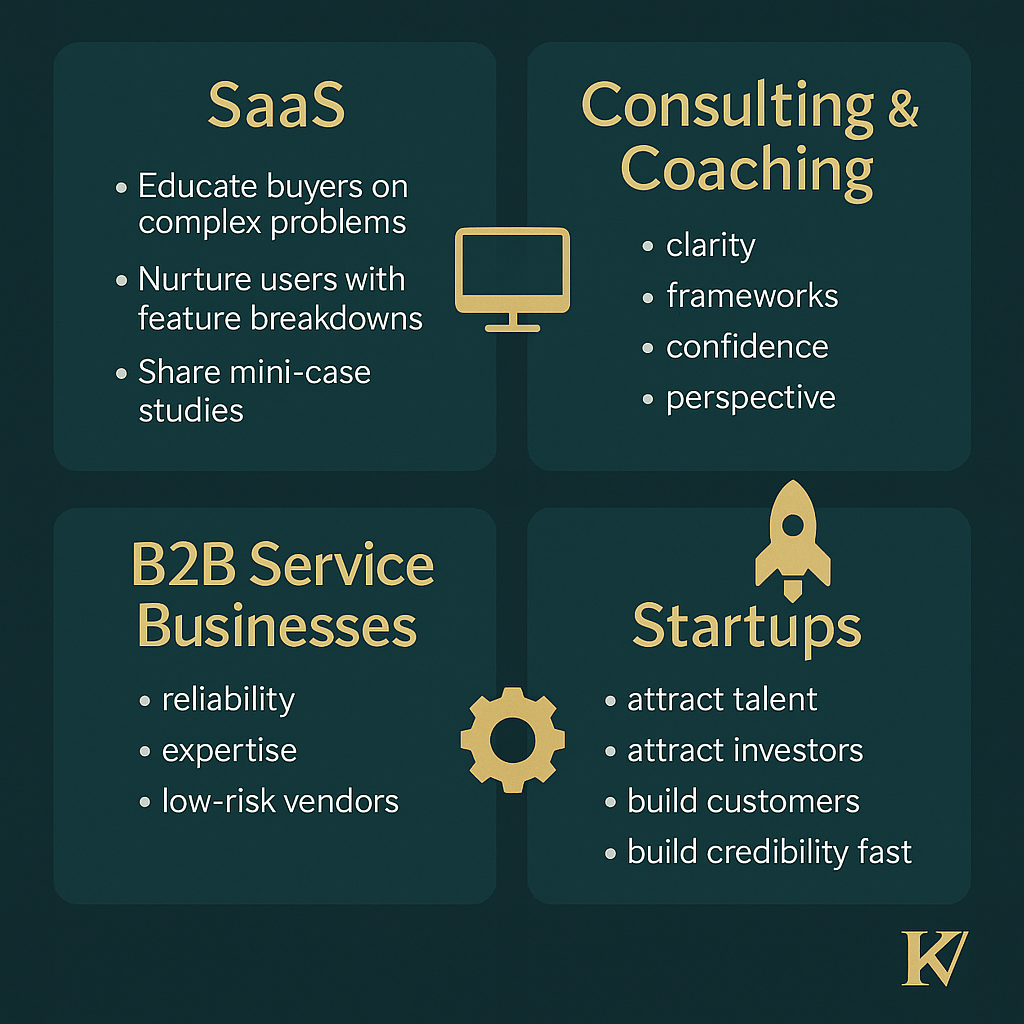
In the SaaS world, social media for sales is all about turning complexity into clarity. SaaS brands use social platforms to educate buyers on complicated problems, walk them through feature breakdowns in a simple, visual way, and regularly share mini case studies that show real outcomes, not just promises. When prospects understand how the product solves their pain and see proof through content, the sales cycle naturally shortens because confusion drops and confidence rises.
For consultants and coaches, social media becomes a live demonstration of their thinking. Buyers are looking for clarity, frameworks, confidence, and perspective before they ever book a call. That means every post, carousel, or video should feel like a window into how you see the world and solve problems. When done right, your content becomes a sample of your mind, so by the time prospects reach out, they already trust your expertise and are much closer to a buying decision.
In B2B services, buyers are hunting for reliability, expertise, and low-risk partners. Social media is the perfect place to prove all three. Instead of generic marketing fluff, high-performing B2B brands use social to walk through their process, introduce their team, and showcase results through client stories and behind-the-scenes snapshots. The more you de-risk the relationship through transparent communication, the easier it is for decision-makers to say “yes.”
For startups, social media is not just a marketing channel; it’s the brand engine. Early-stage companies use it to attract talent, get on investors' radars, build their first wave of customers, and rapidly establish credibility in a noisy market. When a startup shows up consistently with a clear point of view, real progress updates, and proof of momentum, social media becomes the bridge between obscurity and opportunity.
Not every company has a massive media budget. That’s okay.
Here are simple, high-ROI tactics:
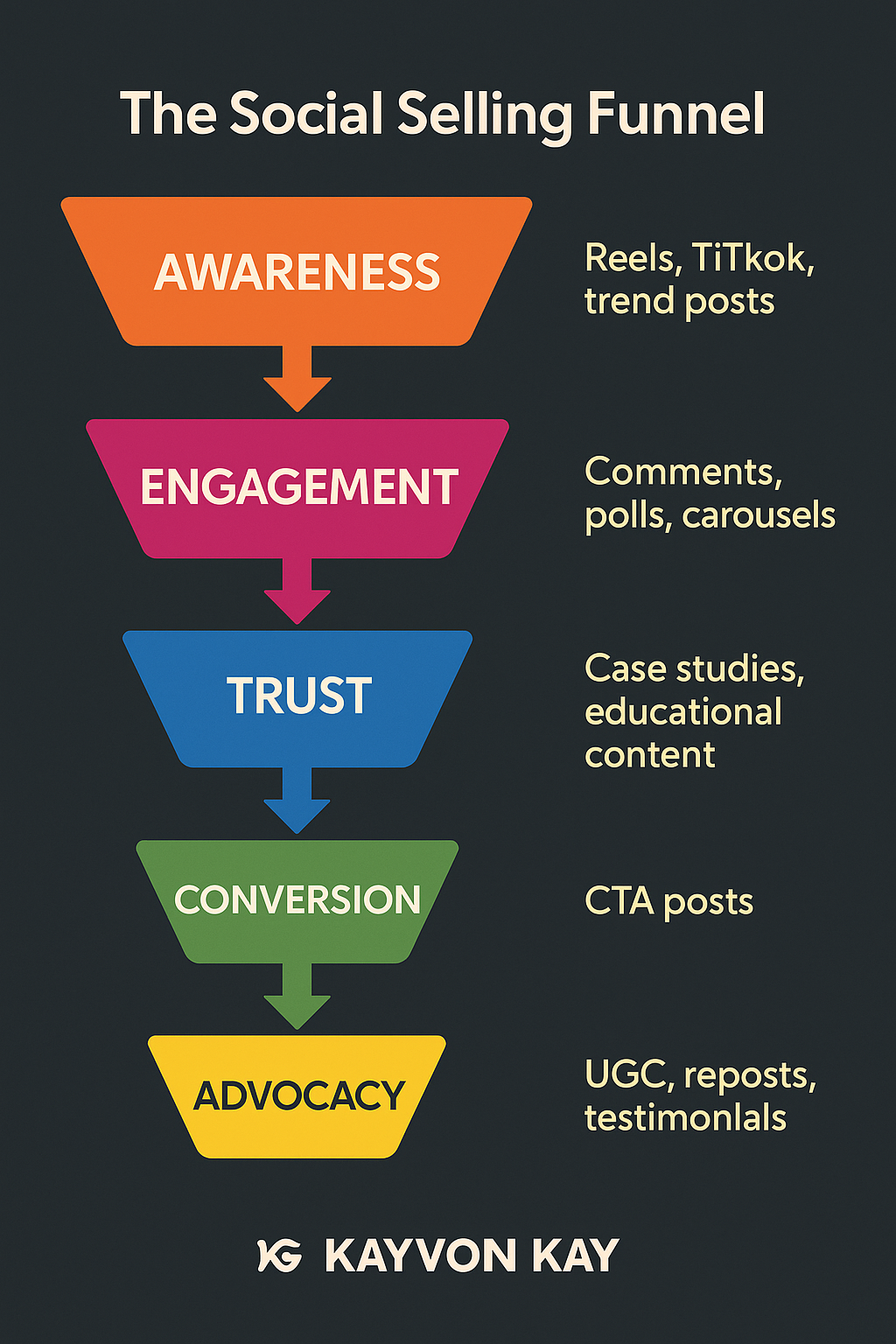
The brands winning today aren’t posting for likes, they’re posting for leverage. Social media for sales is no longer optional. It’s the difference between:
If you want your sales team to dominate the next era of digital selling, start by mastering the platforms where your buyers already live.
Explore Kayvon Kay’s consulting and training programs.
🎙️Tune into The Vault Unlocked Podcast for deeper breakdowns and live case studies
Let’s turn followers into buyers, and buyers into loyal advocates.
Minimum 3–5 times per week. Consistency beats volume.
LinkedIn, hands down, but YouTube builds the deepest trust.
No. It amplifies it. Social warms the lead; your system closes it.
Expect 60–120 days for meaningful traction.
Paid traffic scales. Organic builds authority. Use both.
Kayvon Kay
Kayvon has over two decades of experience working with high-level closers and perfecting his sales methodologies. He has earned the title of Canada’s #1 pharmaceutical sales representative and continues to share his expertise as a keynote speaker and through his multi-million-dollar coaching program.