
Share
.png)


Lorem ipsum dolor sit amet, consectetur adipiscing elit. Suspendisse varius enim in eros elementum tristique. Duis cursus, mi quis viverra ornare, eros dolor interdum nulla, ut commodo diam libero vitae erat. Aenean faucibus nibh et justo cursus id rutrum lorem imperdiet. Nunc ut sem vitae risus tristique posuere.

November 11, 2025
Most businesses don’t fail because their product is bad; they fail because their message never lands.
You’ve seen it: brands shouting louder but saying less. Campaigns that burn budget without building trust. Teams are creating endless content that fails to connect.
In an age where customers are bombarded with over 10,000 marketing messages a day, clarity isn’t a luxury but a survival. That’s where a marketing communication strategy comes in. It’s not just about what you say; it’s about how, when, and why you say it.
As Kayvon Kay preaches on The Vault Unlocked Podcasts, effective communication is built on alignment between the brand, audience, and execution.
In this guide, we’ll break down how to build a high-performing marketing communication strategy that does more than attract attention; it drives action, loyalty, and revenue.
At its core, a marketing communication strategy is the master plan behind every message your business sends into the world.
It defines:
When done right, it turns scattered marketing efforts into a consistent, compelling narrative, one that customers recognize instantly and trust instinctively.
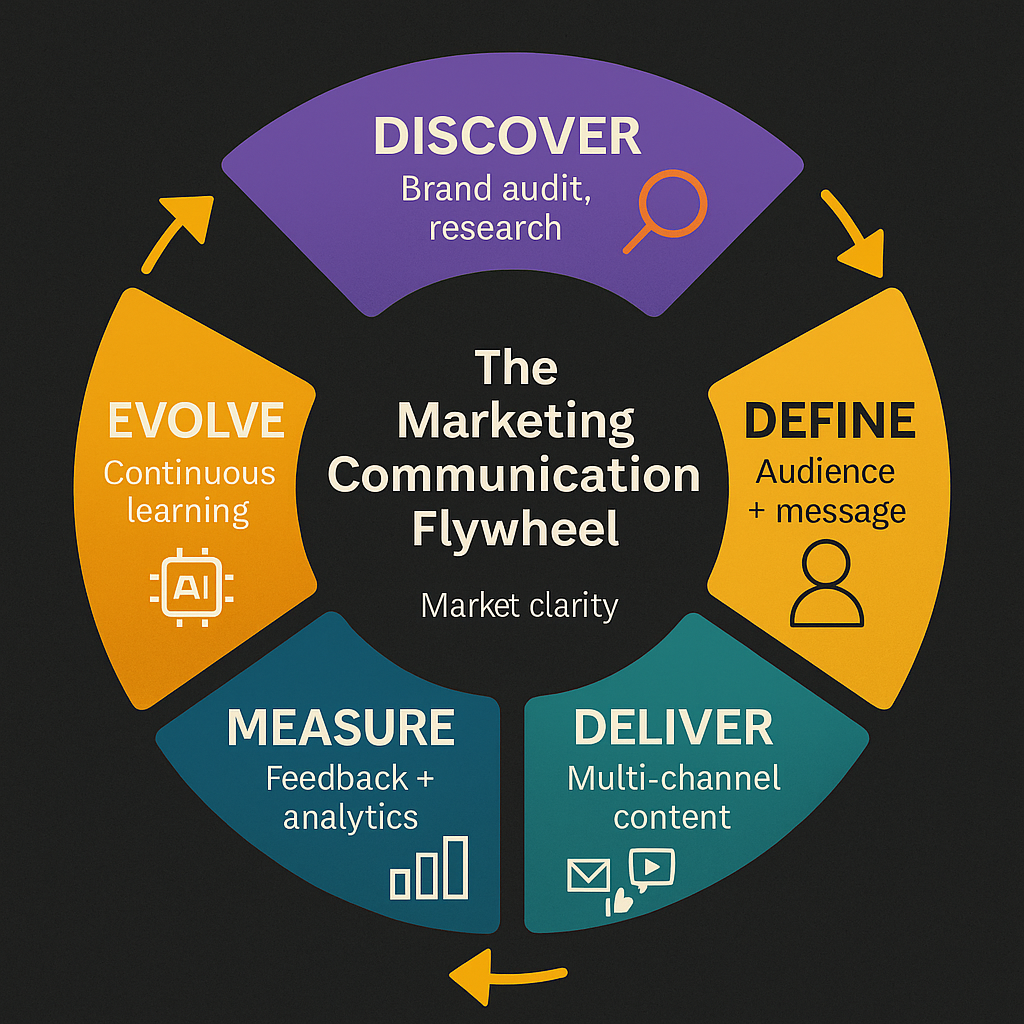
Building a strategy that actually converts requires a structured approach. Here’s what separates the pros from the noise:
Before you speak, you need clarity on who you are.
Brand positioning is the anchor of your marketing communication strategy. It answers three questions:
Your brand must occupy a specific, emotional space in your audience’s mind. When you define that space, every message, from ad copy to executive email, reinforces it.
According to research published in Harvard Business Review’s “The 30 Elements of Value,” brands that clearly define and communicate their core value proposition build stronger customer loyalty and greater pricing power, directly tying clarity of value to long-term growth.
Great communication fails when it’s aimed at everyone.
Segment your audience by:
This allows you to personalize your messaging, turning generic “marketing” into a meaningful conversation.
Example: B2B decision-makers respond to authority and ROI data. Consumers respond to emotion and simplicity. A unified strategy should be able to speak both dialects fluently.
If your brand message doesn’t pass the “scroll test,” you lose.
A powerful message framework includes:
Think of your message like a rhythm, consistent, confident, and clear. Repetition builds recognition, which in turn builds trust.
🎧 Kayvon’s Tip: “Every message you put out should sound like a continuation of one conversation, not a new pitch.”
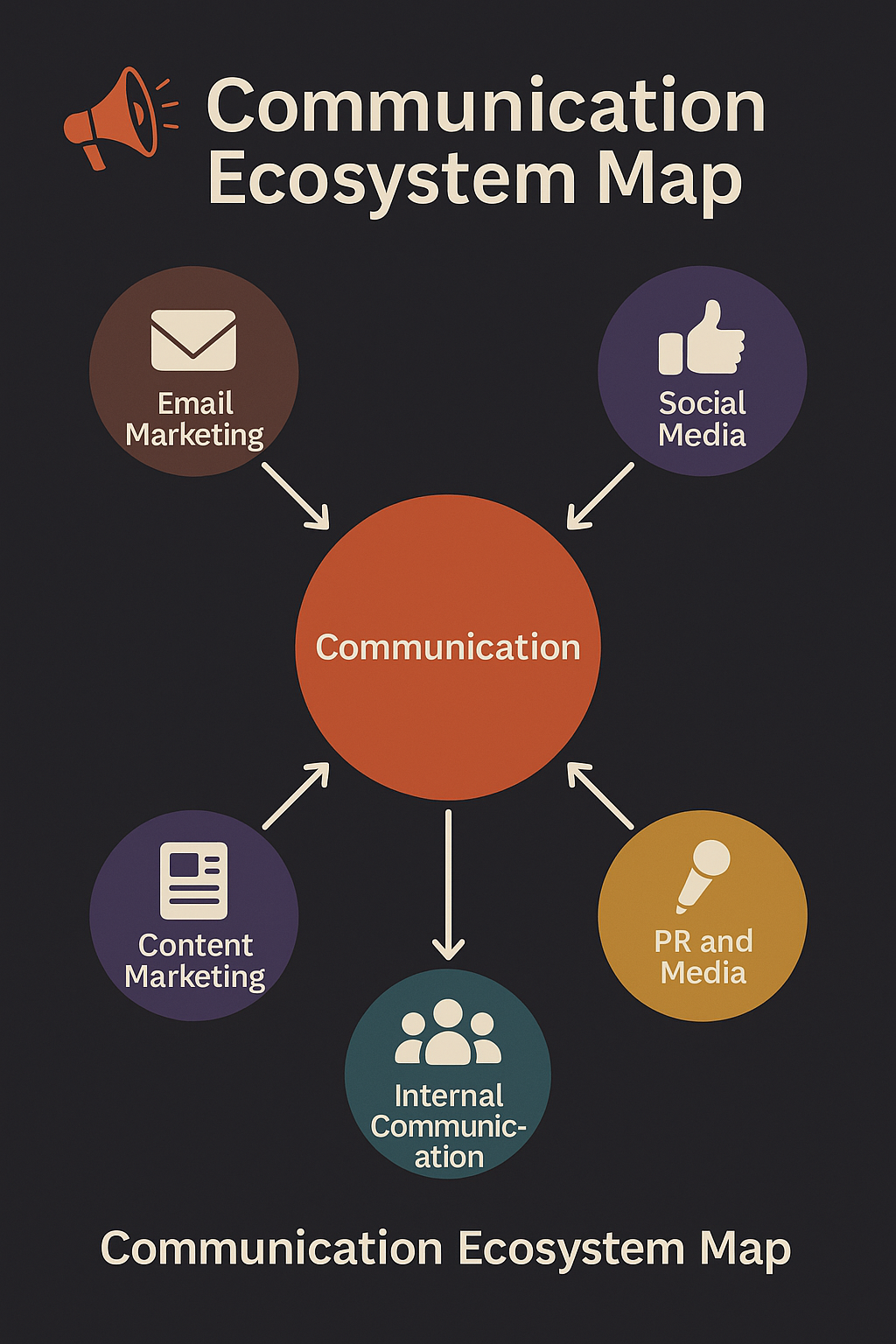
Your message needs a system. That means aligning communication across digital, social, and human touchpoints.
Top marketing communication channels:
Each channel has a purpose, but they must all point in one direction.
The most dangerous assumption in marketing? Thinking your message worked because you said it well.
Your communication strategy must include real-time measurement:
Use tools like HubSpot, Google Analytics 4, or Sprout Social to capture behavioral insights, and let the data tell you what your audience actually heard.
According to McKinsey, data-driven marketing teams are 23x more likely to outperform their peers in customer acquisition.
Marketing isn’t persuasion, it’s psychology.
The goal isn’t to manipulate but to align with how humans make decisions.
Here are three timeless psychological levers used in top-performing communication strategies:
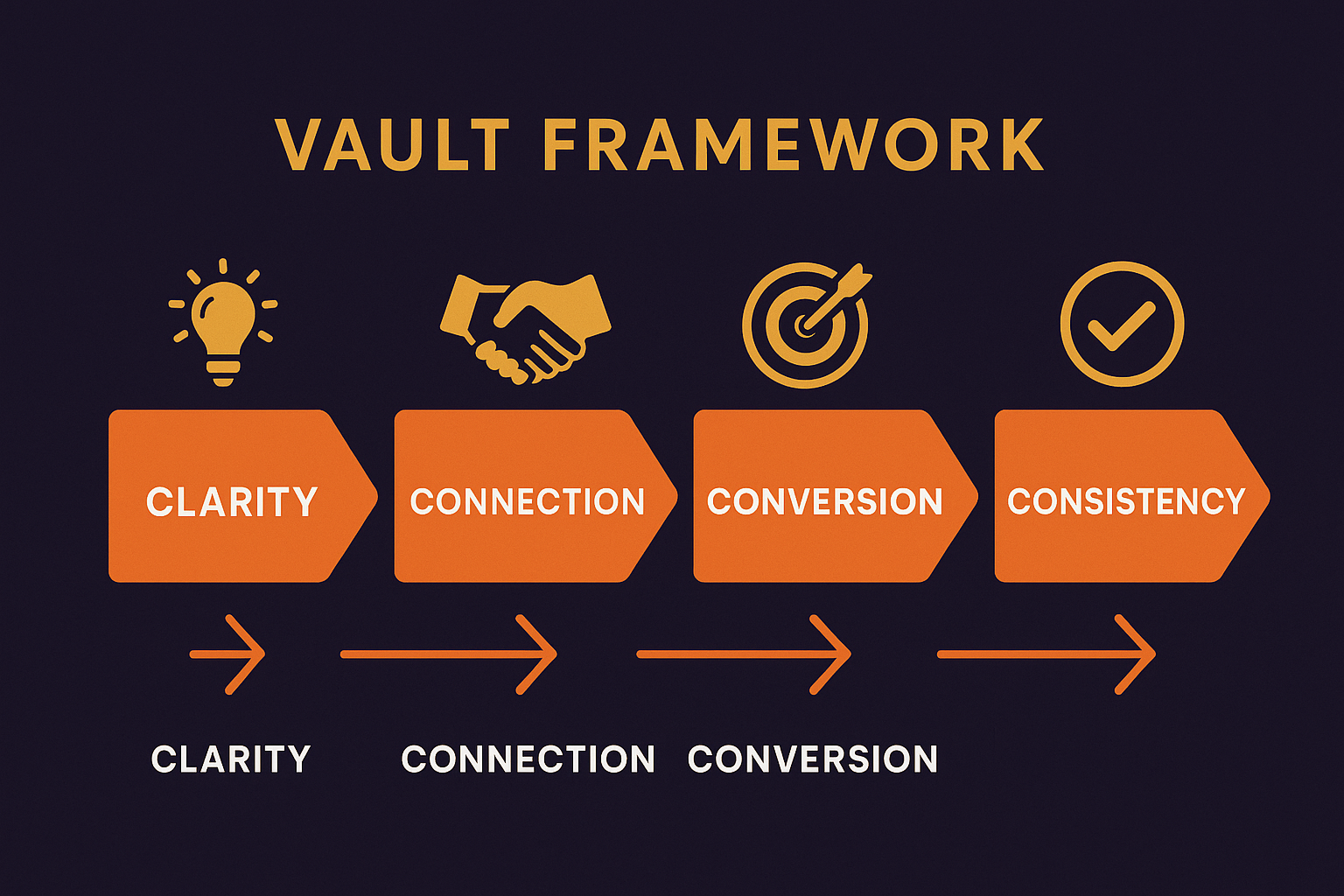
Here’s the process Kayvon and his team at Vault Unlocked use when advising leadership teams and high-growth organizations:
Audit your current communications:
Gaps here reveal where confusion begins.
Step 2: Define Clear Objectives
Set measurable goals tied to outcomes, not vanity metrics.
Examples:
Every communication effort must align with these objectives.
Your “message architecture” defines how your brand speaks at every touchpoint.
It includes:
The key is internal consistency. As Kayvon puts it, “Confusion kills momentum faster than competition.”
Your communication channels depend on where your audience listens.
Hybrid brands must seamlessly orchestrate all three.
The biggest communication breakdown occurs between the people generating leads and those closing them.
To fix that:
Companies with aligned sales and marketing teams achieve 38% higher win rates. (Highspot)
Your strategy only scales when your systems do as well.
Adopt tools that unify communication and track engagement in real time.
Recommended tech stack:
Automation isn’t about replacing people, it’s about amplifying them.
Communication consistency starts with culture.
Why This Matters for Leaders and Executives
For executives, communication is leverage. The message your brand shares with the market reflects how you communicate internally. Misalignment between teams always mirrors misalignment in your messaging.
When leadership invests in a structured marketing communication strategy, it doesn’t just drive revenue; it builds resilience.
As Kayvon emphasizes, “True growth happens when your brand voice, culture, and customers speak the same language.”
Avoiding these pitfalls turns your communication into an asset, not a liability.
The next frontier of communication blends human storytelling with intelligent technology.
Emerging trends shaping the next decade include:
But here’s the truth: even as technology evolves, clarity, trust, and emotion remain timeless.
In a noisy world, communication isn’t just part of marketing; it is marketing. A winning marketing communication strategy doesn’t chase trends; it builds trust. It unites leadership, teams, and customers under one clear message: this brand gets me.”
Unlock your brand’s potential with frameworks that align marketing, leadership, and sales into one cohesive message.
🎧 Listen to The Vault Unlocked Podcast for powerful, practical conversations on growth, communication, and leadership transformation.
1. What is the goal of a marketing communication strategy?
To align brand messaging, channels, and customer touchpoints to create consistent engagement and conversion.
2. How is marketing communication different from marketing?
Marketing drives promotion. Communication drives connection. Both are essential for establishing trust and achieving long-term brand equity.
3. What are the key tools for marketing communication?
CRMs, content management systems, analytics dashboards, and automation platforms.
4. How do I measure success?
Track engagement, conversion rates, customer retention, and sentiment scores.
5. How often should a strategy be updated?
At least every 6–12 months, or whenever market dynamics shift significantly
Kayvon Kay
Kayvon has over two decades of experience working with high-level closers and perfecting his sales methodologies. He has earned the title of Canada’s #1 pharmaceutical sales representative and continues to share his expertise as a keynote speaker and through his multi-million-dollar coaching program.